

Like
Comment
Share
The Luminous Heritage of Bengal's Spiritual Soil: The History of Hazrat Makhdum Shah Daula Shahid (R.) and Shahzadpur Dargah Sharif 🌹✨🕊️
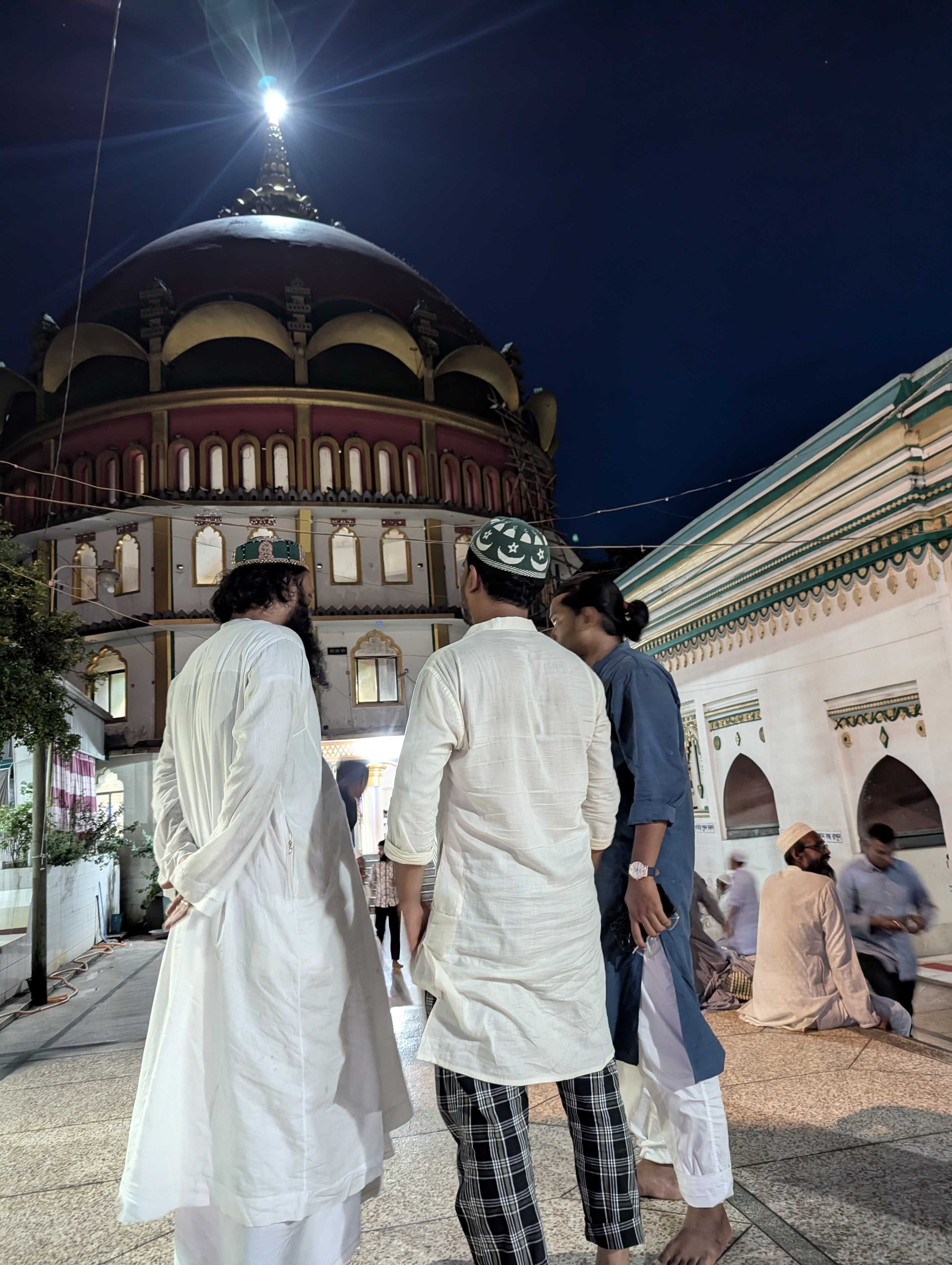
Located on the banks of the Hurasagar River in the municipal town of Shahzadpur, Sirajganj, stands a proud and sacred testament to Bengal's ancient Sufi history—the Shrine and Ancient Shahi Mosque of Hazrat Makhdum Shah Daula Shahid Yamani (R.).
1. Forsaking the Royal Palace for the Journey of Truth
According to history and local traditions, Makhdum Shah Daula was a royal prince of the royal family of Yemen. However, the illusions of the world, the lust for power, and a luxurious royal lifestyle could never captivate his soul. Eager to spread the divine love (Ishq) of Allah and the noble ideals of the Prophet (PBUH), he renounced his royal crown and left his home in the garb of a fakir. Passing through the city of Bukhara, he spent some time in the company of the eminent saint Hazrat Jalaluddin Bukhari (R.) before setting out for Bengal. Tradition holds that Jalaluddin Bukhari (R.) gifted him a special pair of doves, which still inhabit the cornices of the Shahzadpur Dargah Mosque as "Jalali Doves."
2. Arrival in Shahzadpur and the Propagation of Truth
After a long water journey, his boat anchored on the soil of Shahzadpur. At that time, this region was under the rule of King Vikram Keshari of Subah Bihar. Accompanied by his mentor and Murshid, Hazrat Shah Shamsuddin Tabrizi (R.), along with numerous followers and companions, Makhdum Shah Daula (R.) constructed a small cottage and a mosque to offer prayers (Panjegaana) and engage in worship. When his unmatched character, love for humanity, and spiritual influence inspired common people to embrace the path of truth in droves, severe conflicts arose with the local ruler, King Vikram Keshari.
3. The Crimson History of Sacrifice and Martyrdom
Along the path of propagating the truth, fierce clashes broke out with the royal army. Ultimately, falling victim to a deep conspiracy and betrayal, Hazrat Makhdum Shah Daula Shahid (R.) achieved martyrdom while performing the Asr prayer. Because of this supreme sacrifice, he remains immortalized in history as "Shah Daula Shahid." Many of his companions and disciples also attained the status of martyrs, and their sacred graves are preserved to this day in the southern corner of the mosque as "Ganj-e-Shahidan" (The Treasurehouse of Martyrs).
4. The Banner of Victory and Modern Shahzadpur
Even after the martyrdom of the Pir and Murshid, this stream of Tariqah did not stop. Through the relentless efforts of his successors and companions, the luminous light of Islam spread across this region of Bengal. Later, during the Sultanate era, the historic Shahi Mosque was built here, whose architectural style continues to bear witness to medieval Muslim cultural heritage. Named after Makhdum Shah, the region came to be known as "Shahzadpur" (the city of the prince).
Conclusion:
Standing today in the serene, sacred courtyard of Shahzadpur Dargah Sharif and feeling the peaceful atmosphere all around, one realizes that it is through the blood and sacrifices of the saints that the light of faith and peace was ignited in our hearts. To shed all worldly illusions and seek inner spiritual tranquility, the peaceful environment of this shrine serves as a unique sanctuary.
🤲 May Allah illuminate our hearts with the Ishq and love of the righteous saints. Ameen!
#shahzadpursharif #makhdumshahdaula #sufism #tasawwuf #sufihistory #sirajganj #spiritualawakening #divinelove #zikr #sufibadiapp #pathoftheheart
The Luminous Saint of Bengal's Spiritual Horizon: Hazrat Shah Sultan Balkhi (R.) and the Light of Sufi Philosophy..❤️
In the labyrinth of this material world, when humanity becomes blinded by the lust for power and status, history bears witness that souls of extraordinary magnitude have emerged—individuals who discarded royal crowns and worldly luxuries to dedicate their lives entirely to the love of Almighty Allah. Among the luminaries of Bengal's Sufi history, the mystic saint and great Wali, Hazrat Shah Sultan Balkhi (R.), holds a profound place. His life and spiritual practice are not merely a chapter of history, but a timeless school of self-purification and Tariqah.
1. Forsaking a Royal Crown for the Path of Tasawwuf
According to historical accounts and local traditions, Hazrat Shah Sultan Balkhi (R.) belonged to a royal family in the historic city of Balkh (in modern-day Afghanistan). All the comforts of the royal palace, golden vessels, and the allure of power could never quench his soul's deepest thirst. He realized that true happiness and peace lie in liberating oneself from the slavery of the carnal self (Nafs) and attaining the pleasure of the Creator. Consequently, he shed his royal garments and sovereign throne, wrapping himself in the simple cloak of a fakir to walk the path of Tasawwuf.
2. The Propagation of Sufism in Ancient Bengal
During the medieval era, great saints and dervishes traveled from distant Arabia, Persia, and Central Asia to spread Islam and Sufi ideals in Bengal. Hazrat Shah Sultan Balkhi (R.) arrived in the ancient Pundravardhana region, specifically Mahasthangarh and its surrounding areas in northern Bengal. Given the socio-political realities of that era, rather than using force, he won the hearts of the common people through his unmatched character, mercy, justice, and mystic conduct. Countless people found the path of truth and light through his company.
3. The Core Teachings of Tasawwuf and Self-Purification
Sufism or Tasawwuf is not merely about seclusion or miraculous feats; it is the art of subduing the animalistic instincts within man to shape an Insan-e-Kamil (the Perfect Human). The life of Hazrat Shah Sultan Balkhi (R.) teaches us how to abandon worldly attachments and remain deeply immersed in the remembrance of Allah (Zikr). When a person sheds their ego, the light of Marifah (Divine Gnosis) illuminates their heart. His shrine and its serene surroundings continue to inspire thousands of spiritual seekers to turn toward the Divine.
4. The Relevance of Hazrat Shah Sultan Balkhi (R.) in Modern Life
In today’s restless and selfish world, torn by conflict and hostility, the generosity, universal love, and forgiving nature of Sufi saints serve as our greatest guiding light. The ideals of great masters like Hazrat Shah Sultan Balkhi (R.) teach us how to serve all humanity regardless of creed and how to purify our inner souls.
Conclusion:
Let us remember our roots and the supreme sacrifices made by our righteous saints. Setting aside material narrowness and greed, let us illuminate our hearts with the pure light of Sufism and Tasawwuf. May the path of love shown by our Beloved Prophet Muhammad (PBUH) and the saints of Bengal remain our ultimate sanctuary of liberation.

Is the River Listening to All My Words?
Outside, nature wore a strange, quiet shroud. Everything was silent, save for the rustle of leaves in the breeze and the distant call of some unfamiliar birds. At that moment, keeping myself confined within the four walls of the room felt impossible. Throwing on a simple T-shirt, I walked towards the riverbank. Standing by the edge of the water, it felt as though this solitary act of gazing at the flowing river—while it moved past me in absolute silence—held a strange, unspoken language. My wandering mind softly questioned, "Is this silent gaze merely a game of tearful eyes, or is this river truly listening to all my unexpressed words?"
1. The Knots of the Mind and the Endless Flow of the River
Our lives are woven with a strange kind of mechanical routine. Waking up every morning, rushing into an invisible race, fighting to achieve goals or simply to survive—amidst all this, a mountain of fatigue builds up inside. And when night falls, the real battle begins. Inside the head, the factory of overthinking or excessive worrying starts working overtime. What did someone think? What will happen tomorrow? Why did I make that mistake?—thousands of questions twist and tangle inside the mind.
When this mental chaos becomes unbearable, we desperately need someone—someone or something that won't judge, won't lecture, but will simply listen. Forget other people; often, we are afraid to speak our hearts out even to our own shadows. At that very moment, the stillness of the riverbank acts as a profound therapy. Just as the river flows along its own course, the turbulent currents of thoughts inside my head also seem to find a quiet place to settle by this riverbank.
2. What Does It Mean to Look Back?
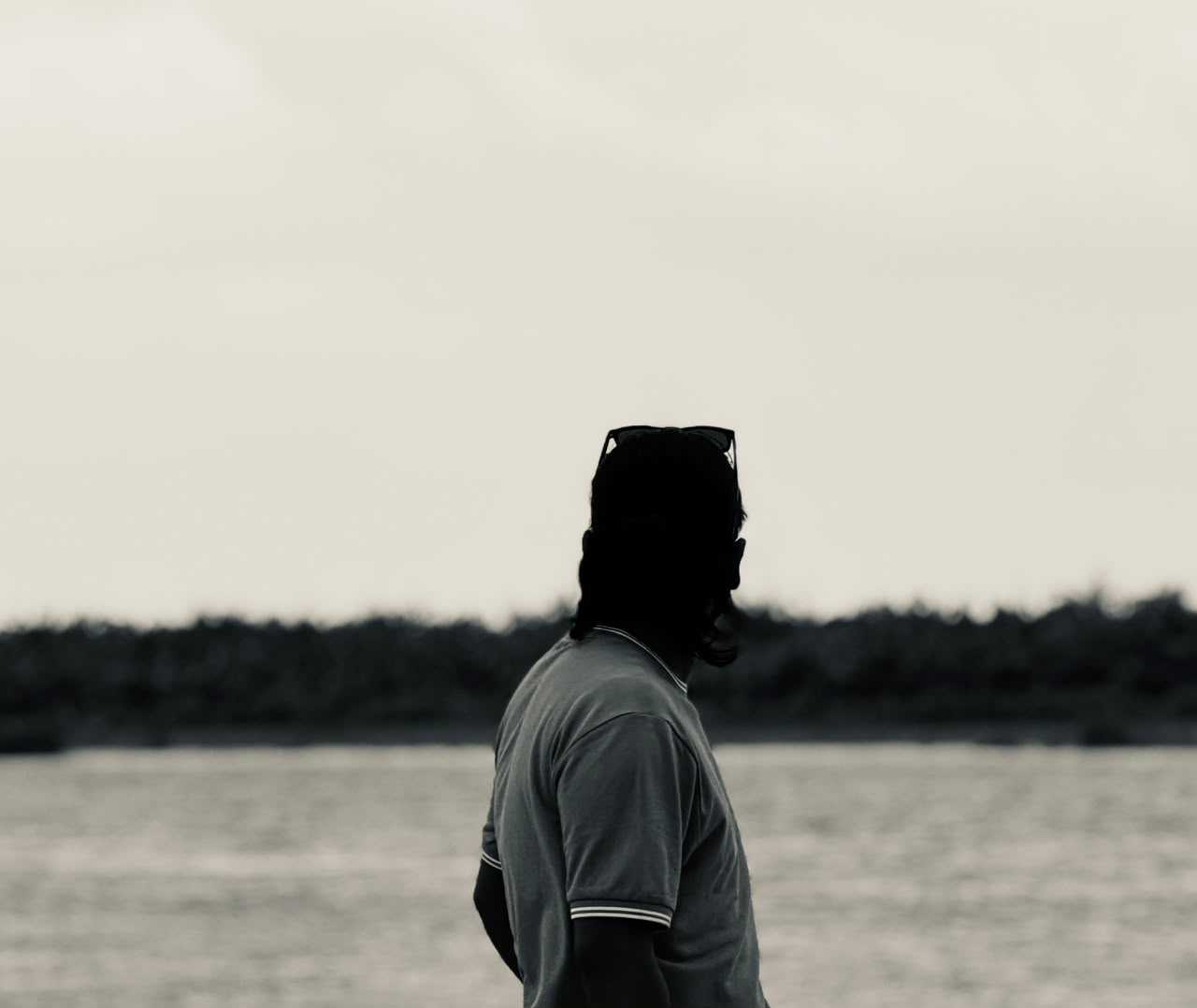
Looking at the picture, the person is standing facing away or slightly to the side towards the river. A hint of sunlight or breeze dances through the hair, and the gaze is fixed on some distant horizon or a bend in the river. Life often brings us to a point where looking forward reveals nothing but a foggy uncertainty. Then, we are forced to look back.
Looking back is not a sign of weakness; rather, it is about viewing past mistakes from a slight distance and creating a reconciliation with oneself. We spend our entire lives in terror of the future, but stopping by the riverbank in the present moment allows one's inner turmoil to quiet down for a while. The river seems to remind me—"You are merely a single point, but just as this current has flowed for ages, the pain or anxieties of your life will one day dissolve like a drop of water."
3. Does the River Truly Listen?
If judged by science or logic, a river is nothing more than inanimate water. It has no ears, no feelings, no mouth to offer consolation. Yet, the human mind operates in strange ways. When the soul suffers from extreme loneliness, it discovers a distinct kind of life amidst plants, the sky, and these rivers.
Standing on the riverbank, when I recall all the suppressed pain, unspoken grievances, or failures accumulated inside, it feels as though the river is listening to every single sigh of mine very intently. As the small ripples strike the shore and recede back, it feels as though the heavy sighs trapped inside my chest are blending with those waves and losing themselves deep within the river. The river gives no answers, offers no solutions—yet its silent presence becomes the ultimate answer. People often increase pain with long lectures, but the river reduces pain without uttering a single word.
4. Self-Reconciliation
This moment of standing by the river is a deep internal dialogue with oneself. All day long, we live wearing masks for thousands of people in the world, hiding our true selves out of fear of what others might think. But in the utter solitude of the riverbank, there are no masks. Here, I am completely alone, completely bare before my own thoughts.
This act of looking back and gazing intently at the river is actually a process to untangle those inner knots. I wonder, why do I overthink so much? Why do I turn a minor issue into a mountain and do injustice to myself? The continuous flow of the river teaches me that no matter what happens in life, stopping is not an option. No matter how complex the situation, the current of time waits for no one. And I must also move forward by adapting to that flow.
5. In Search of Inner Peace and Self-Purification
This inner battle in the head, this stubborn obsession to keep everything under control—where is the actual path to escape from this? The answer perhaps lies not anywhere outside, but deep within ourselves. Just as it is stated in Sufi philosophy, amidst all the worldly hustle and bustle and noise, there is a separate realm to calm one's soul (rooh). To dive deeper into this journey of distancing oneself from external noise and getting acquainted with one's subconscious mind, you can check out Sufibadi.com. It features wonderful discussions on self-purification, psychological peace, and the profound philosophy of life, which teach our restless minds to pause, if only for a little while.
6. The Peace Before Heading Home
After standing by the river for a while, the heavy feeling inside the head slowly begins to lighten. It feels as though, even if the mental knots haven't completely untied, at least a path has been found. With the cool river breeze, the serene environment, and this hide-and-seek game with my subconscious mind concluded, stepping onto the path back home makes the physical fatigue feel far less burdensome.
At the end of the day, we are all seekers of a little peace. We look for a sanctuary where no one will point out our flaws, where no one will judge us. This riverbank is precisely that kind of silent refuge. As long as this earth exists, the tangled sorrows of human hearts will somehow find their way to some riverbank. The river may not speak a single word, but amidst its murmuring flow and silent gaze lies all the comfort of the universe. And therefore, every time I visit the river, it feels—yes, the river has heard all my words, and my heart is now much lighter than before!
Don't let the serious face fool you—I'm just planning the next punchline.